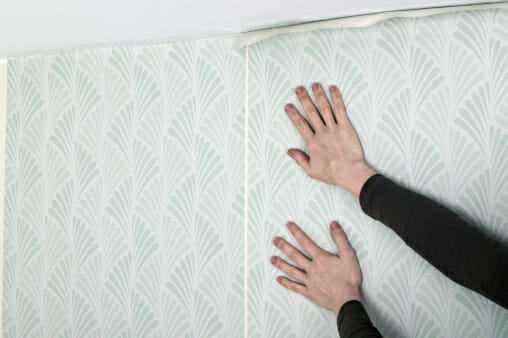
Despite the revival of patterned wallpaper, many homeowners still prefer to paint their walls. It’s often felt that a simple lick of paint, rather than a busy wallpaper, provides a blank canvas which offers more creative design options – allowing them to change the feel of a room by adding curtains and cushions, for example, in complementary or accented colours. Unless you live in a new build or have had your walls plastered by a master plasterer, the best finish for your paint job will always be achieved by using lining paper, because it hides the multitude of small imperfections and cracks that can develop in older properties.
Lining paper can also be used to provide a soft and even base layer for your patterned wallpaper ─ it’s definitely recommended for very expensive papers, as it helps to achieve a much more professional finish.
What is it exactly?
Unlike patterned wallpapers, lining paper is produced from wood pulp, and as with most things, you tend to get what you pay for. Budget papers are usually made with a mixture of recycled paper and virgin wood pulp, and although it’s possible to buy good quality mixed papers, we would definitely recommend professional quality papers made from 100% virgin wood pulp.
Choosing the correct grade for the job
Whilst it’s important to choose a quality paper, it’s much more crucial that you pick the correct grade for the job:
800-1000 grade – these are ideal for providing a really nice finish on new plaster that has no imperfections, or for preparing walls for patterned papers.
1200-1400 grade – probably the most popular all-rounder, 1200 and 1400 grade paper cover more imperfections, making them popular with professional decorators and DIYers alike.
1700-2000 grade – ideal for walls that are in poor condition, and for old houses where the walls have lots of movement.
It’s important to note that as the grade of paper increases in thickness, it becomes much more difficult to handle. 1700-2000 grade papers require long soaking times and careful mixing of adhesives to stick correctly to the wall ─ they’re also much trickier when it comes to papering around corners.
Lining paper is not a magic wand
Lining paper is a great tool for home decorating, but it’s not a miracle worker. It will cover up small imperfections, but if you want the best finish possible, you must prepare your walls correctly. Taking a little extra time to fill any holes and sand down major imperfections will be time well spent.
When it comes to freshening up tired walls, you’re pretty much faced with two options: paint or wallpaper. Whilst the condition of the walls can be a factor in your decision, wallpaper offers much more scope to be creative – but while the colour and pattern needs to be chosen carefully, you also need to make sure it’s suitable for the area you’re decorating.
Let’s take a quick look at the most common types of wallpaper and when/where they’re best used…
Washable
Not to be confused with vinyl wallpaper, washable papers are made with a transparent coating that’s thick and sturdy enough to be wiped down fairly regularly – but don’t mistake that for suitability in high-condensation areas, like bathrooms. Great for grubby little hands, so can be ideal for a kid’s bedroom.
Embossed
These papers have always been popular in older houses where the plaster has seen better days. The raised pattern works wonders at hiding imperfections in the walls, and they’re long lasting because they can be painted when the patterns begin to wear and you need another quick refresh.
Vinyl coated
A great all-rounder! Vinyl papers are reasonably hardwearing, washable and very easy to hang, making them ideal for almost any situation. They can, however, be tougher to strip, simply because they’re so waterproof.
Vinyl
Like vinyl coated papers but on steroids! These are very tough, highly waterproof and very easy to cut and hang. They’re perfect for areas where water’s a problem, so we recommend them for bathrooms – especially ones without extractor fans. While there are lots of pros, there is one con – and that’s that they can be a nightmare to strip because of their naturally high resistance to soaking up water!
Woodchip
Another relatively cheap way to hide imperfections, but much less commonly seen now as it’s perhaps a little old-fashioned. Woodchip can be made washable if you apply a waterproof paint over it, and you can refresh with extra coats if you want to brighten it up or change the colour.
Pulp
A very cheap patterned type of wallpaper that requires some care to hang correctly because it’s usually relatively thin and is prone to stretching – this can make pattern matching difficult and result in poor results if they shrink back as the paste dries.
Anaglypta
Another excellent choice if your walls are a bit tired and bumpy. Anaglypta embossed papers come in a multitude of patterns ─ some random, some geometric ─ and usually require a coat or two of paint to finish them off. Random patterns are much easier to hang, so are ideal for less experienced DIYers!
Blown vinyl
Very much like embossed papers, and another great option for hiding less than perfect walls.
Textured vinyl
Those craggy old walls are well catered for, with yet another choice for covering up the cracks ─ especially in bathrooms and kitchens due to its waterproof nature.
Flock
One of the oldest wallpapers around, flock’s still very popular in restaurants and pubs, but can also make a great statement on a feature wall in your home. They’re delicate, however, so they may not be the best option if you have kids running around.
Hand-printed
Very expensive and tricky to get to grips with, but this wallpaper can produce stellar results. Hand-printed papers are produced by applying a printing block, the width of the paper, by hand. If you fancy something as exotic as this you’ll definitely want to employ a professional to hang it to ensure it looks as good as intended – and be prepared to spend a pretty penny as it’s not the cheapest option on the market!
Luxury
As the name implies, these papers are well made, thick and beautifully designed. They’re often at the forefront of modern design and can cost over £100 a roll! Whilst a DIY enthusiast could hang a paper of this quality, it’s another one that we’d recommend handing it over to a professional.
Metallic
Metallic papers look great on the wall and are often a real talking point. Like mirrors they can make a room look bigger, but it pays to be very careful whilst hanging them to protect the pattern ─ you definitely don’t want to fold or crease these.
Fabric backed
Fabric backing is used on certain foil and vinyl papers to add strength and durability. In essence, the paper backing is replaced with fabric, so they’re super strong, very easy to hang and can be stripped off in whole sheets when the time comes to start again! Perfect for mucky hands because they can be scrubbed like a carpet if necessary.
Natural silk
Natural silk papers are beautiful and delicate, but perhaps not suitable for the average family living room. It’s tricky to hang, easy to rip and completely intolerant of paste that’s been inexpertly splashed on the pattern during the hanging process. They’re worth the trouble for a feature wall in a low traffic area, but you’ll probably want to let a pro have the fun of hanging them.
Borders
Borders are fun! Use them to panel doors, add features to plain walls, split walls between patterned and plain paper ─ let your imagination go wild! They come in many patterns and are usually paper backed with vinyl coating for a reasonably hardwearing life.
If you’re more concerned with getting the existing paper off before hanging the new, then our ‘stripping wallpaper the easy way‘ blog might help – and if you need a hand with hanging your chosen paper and you live in the Leeds area, please feel free to get in touch for a no-obligation estimation!
Even the most enthusiastic DIYer sometimes faces a decorating task that they wish they’d left to an expert. While many jobs can be attempted with limited skills, some more complicated decorating jobs should really be passed on to a professional with the right experience and tools if you want to be sure of a quality finish.
Let’s face it, if you’re having a bash at decorating your home, you don’t want the result to look shoddy! A lick of paint and a bit of sanding is easy enough, but there are some aspects of interior design that take years to get right. If you’re decorating without the right experience, you could end up being reminded of your poor workmanship every time you step into that room – and it won’t be long until you shell out for a pro to make good your mistakes, meaning you pay for the work twice in terms of time, materials and execution!
5 decorating jobs you should hand over to a pro
Here are the main decorating jobs that should be left in the hands of a professional unless you really know what you’re doing…
Patterned wallpaper – lots of people try their hand at wallpapering and the results are good enough, but there are certain circumstances where you’ll be glad of professional help. For example, if you’re covering a room or a feature wall in a paper with a complex pattern, you really don’t want it to become a feature for all the wrong reasons! Matching a pattern properly, and doing so without a lot of waste, is really difficult – but a pro decorator will ensure that the joins are faultless. Similarly, if your house is old and a bit on the wonky side, any type of patterned wallpaper can fast become a nightmare due to the walls not being square – an experienced eye may be the only way to keep the paper straight and looking neat and tidy.
Coving and ceilings – wallpaper and paste in your face or badly cut coving angles where the walls meet could leave your room looking more disaster than designer. Even if you do the walls and paintwork yourself, these jobs are generally better passed on and paid for. Your stress levels will thank you for that little extra investment!
Hall, stairs and landings – ok, so the hallway and landing may not be insurmountable, but scaling the dizzy heights and hard to reach places at the top of the stairs can be a real pain, not to mention dangerous. Unless you have Inspector Gadget arms, you’re never going to manage those extra long lengths of wallpaper, or even the painting if you want to ‘cut in’ professionally. Don’t be a dingbat – call in a pro with the right equipment to safely solve the problem. It’ll take half the time, and look twice as good, and you won’t have a worried other half freaking out about the obvious dangers.
Exterior painting – from the walls themselves, to panels, soffits, fascias and shutters, there are plenty of outdoor areas that need attention to keep your home’s exterior looking smart and shiny. However, much like the previous point, getting up that high, doing a good job and staying safe is not for the faint hearted. Many people find that they’re distracted by the safety aspect, and make silly mistakes, or splatter paint where it doesn’t belong. Don’t put yourself through this unless you have a genuine head for heights, a sturdy ladder and some experience of cleaning up, preparing and painting exteriors.
Could you get your tiling this perfect? Maybe not, but a pro could!
Tiling – yes, some people are perfectly capable of tiling a kitchen or bathroom and doing a good enough job, but the cost of time taken and mistakes made can soon tot up. A pro will get the job done much quicker, with a result that looks just perfect. Spacing, grouting and patterns will be exactly as they should be, and they’ll know where to start to get the most symmetrical and stylish finish.
These are definitely the main decorating jobs that we’d recommend hiring a professional for, but there are some other home improvement jobs that should NEVER be attempted yourself (unless qualified). The main one has to be anything to do with gas or boilers, closely followed by electrical works – and some more complicated plumbing jobs should be left to the experts too.
No matter how hard you try to avoid it when you’re sprucing up your home, decorating mistakes and accidents can happen. All is not lost though – you just need to know how to fix them!
As professional decorators, we know the processes and procedures to avoid the pitfalls of dodgy DIY. But if you’re going it alone, and you suffer a spill or a problem, here are our tips to fixing them quickly and effectively.
Our top tips for fixing decorating disasters!
Scrapes and gouges – been a little heavy handed with the wallpaper scraper? Don’t panic! Gouges and dents in the plaster can be easily fixed with some quick drying filler. Apply according to the instructions and then sand it down once dried to give you a smooth surface.
Colour me bad – if you’ve just applied a coat of paint and you’re not happy with the colour, first of all, you need to give it time! Bear in mind that the colour will change slightly once it dries. Also, when you’ve been staring at the same colour for hours, your perception can become a little skewed – so it’s worth waiting till the next day before you decide to cover it with a different colour. If you like the colour but find it’s still too dark after drying, you can always add some white paint to the pot and add another coat to lighten the effect.
Spilt paint – if it’s still wet, use some kitchen towel to soak up the excess. If it’s already dried, apply some warm water and a little washing up liquid with a cloth and let the paint soften – then gently scrape off the carpet with a palette knife. You may need to repeat the process a few times to get it all up. For hard surfaces, a credit card can remove the paint without damaging the surface, but be gentle! A little turpentine or white spirit can be used if the paint is a gloss rather than water-based.
Air bubbles – if you’ve hung some wallpaper and notice a bubble, you can fix it by making a small incision with a sharp blade, then gently smooth the air out from the sides before smoothing down with a cloth or seam roller. If there’s something trapped under the paper causing the bubble, a slightly larger X shaped cut will allow you to gently lift the paper and remove the offending article with some tweezers, before applying a little extra paste and smoothing it back down – always work from the outside in.
Lifted seams – this is usually caused by not using enough paste on the edges of the wallpaper when hanging. You can apply some extra paste using a thin, artist’s paintbrush, then smooth outwards with a damp cloth, before flattening the edge back down with a seam roller.
Torn paper – if you’ve torn a small piece of wallpaper as you’re trying to place it, you can often do a good enough repair by lifting either edge carefully, applying a small amount of additional paste and smoothing it back down. If it’s a bad tear, gently lift off the whole sheet while the paste is still wet, pulling on the direction away from the sheet next to it, then start again with a fresh sheet.
Measuring mishaps – if you’ve cut a piece of wallpaper too short, don’t throw it away! You’ll almost definitely have a requirement for a shorter piece somewhere in your room, such as above a doorway. Put it aside and use it elsewhere.
Of course if all else fails, you can always call in a professional decorator to help make good the mistake.
If you’re redecorating, stripping wallpaper is an essential but arduous job. You may be going full-out DIY, or taking care of this stage yourself to save money before leaving the rest of the work to a professional decorator.
While it’s a fairly straightforward job, like any aspect of decorating, there are certain processes that are important to follow if you want to get it done efficiently and to the required standard – you can’t hang new wallpaper in lumpy, sticky walls!
Steam strippers are a great idea and can make fairly light work of it, but if you only have one stripper, but several hands on deck, you can mix it up with some manual labour! For some people, they actually find the manual approach quicker and more satisfying. Let’s take a look at the right way to do both.
Preparing your walls for stripping
Whichever method you’re going to use to strip your wallpaper, you need to make sure you cover floors and any furnishing that you can’t remove from the room. If possible, tape some plastic sheeting from the top of the skirting board, and out to about the first couple of feet from the bottom. You can also use towels, large sheets or similar. Remember there’s going to be a lot of water, so also cover any electrical outlets with tape.
The next thing you need to do is find an edge of the wallpaper that’s already lifting from the wall slightly, preferably a top corner. Lift it further with a putty knife and then gently but firmly grip with both hands, and start to peel it back, using a 45 degree angle and moderate pressure. If you can peel the top layer away, continue to do so throughout the room. If the paper doesn’t come away, skip straight to the next step.
Stripping wallpaper – the soak and scrape technique
Use a scoring tool or small knife to criss-cross score marks across the paper – don’t apply too much pressure!
Fill a bucket with very warm water – as hot as you can comfortable submerge your hand in – and some washing up liquid or fabric conditioner.
Use a car washing sponge to wet the walls liberally – leave to soak.
Make a cup of tea!
Start again! Once you’ve done some more soaking, you can start to scrape the paper – it should peel off in long strips if you place a bit of pressure on the end of the scraper blade as you guide it up, down or across the paper.
You’ll need these if you don’t have a steamer!
Stripping wallpaper with a steamer
This is all pretty much common sense, but do make sure you read the instructions on your steamer carefully. Most steamers have a time limit for being switched on before they need time to cool down.
Just a few things to note:
Don’t put anything except water in the steamer
Don’t hold it in the same place too long, otherwise the plaster underneath can blow
Work by steaming one area, then moving to the direct, next patch, and use your free hand to scrape the bit that’s just been steamed.
Finishing up
Even though all the paper is down, you still have work to do I’m afraid! There will be lots of gluey residue left over from the old paste – and it all needs to come off!
You can use more hot water and washing liquid/fabric conditioner and give it a good going over with a large scraper, or buy a purpose-made gel stripper. Once it’s all off, give it a final wash down in clean water and leave to dry.
It can take the best part of the weekend to strip wallpaper in a large room, or you can call us in and we’ll do it for you!
If you’re planning a decorating or DIY project, it’s a reasonable assumption to think that going it alone will be the cheaper option – but could hiring a professional decorator to do the job actually work out cheaper in the long run? As with many things, it can all depend on your objectives and individual circumstances…
Of course you may accuse us of being bias, but we’ve compiled some valid reasons why the professional touch may be gentler on your pocket.
5 ways a professional decorator could save you money
Cheaper products – while you can find plenty of bargains in DIY stores, if you’re a stickler for quality, you’ll probably want to be sure that your paint and other materials are pro-standard. You can still buy higher end products in the shops, but with what kind of mark-up? A professional decorator will have a trade account, sometimes working directly with manufacturers, which means lower prices – savings they can pass on to you. They’ll also insist on quality.
The cost of all the kit – if you’ve done plenty of DIY before, when the time comes get all the bits and piece out, you often find brushes and rollers that have deteriorated or hardened beyond repair, masking tape that’s almost finished and ladders that have seen better days. If you’re new to decorating, you’ll need to invest in all the peripherals before you even think about the paint and wallpaper! A professional decorator will already have everything required for any type of project, which could balance out other costs, especially when you consider the point above too.
Putting right mistakes – while it may be true that pretty much anyone can paint a wall, when you think about all the preparation such as stripping, sanding, masking off, caulking and the application, such as priming, sizing, glossing, emulsioning and wallpapering you start to realise just how much skill is involved – and if you don’t do things correctly, those mistakes can start costing you money. Additionally, there are plenty of bigger jobs and general planning that if badly done, can amount to more than just a few quid and a bit of extra time to put right. If you’re selling your home, a professional finish rather than a bodged DIY job can even add a bit more value to your home and make it more appealing to buyers.
Saving time – not all costs can be measured in cold hard cash, there’s the investment of your time to consider – and no matter what you’ve accounted for, you’ll often find that the job takes a lot longer than anticipated! If you’re decorating over the weekend but you’re still not finished on Sunday night, you’ll potentially be living in a mess for at least a week! Also, many people use up their precious holiday leave to do the work – but why take that hit when a professional can do it in half the time?!
Smarter solutions and advice – during the initial consultation visit, a good decorator will listen to your ideas and offer advice accordingly, often suggesting things that will reduce your costs without affecting the quality. They’ll have specialist equipment for more unusual or difficult jobs too, or simply to enable a much better finished result – which may be preferential to hiring or buying yourself.
Ultimately, whether you choose to hire a professional decorator or go the DIY route will often come down to your budget – but it’s certainly worth assessing the costs of both before you make a decision. Even if it does end up costing a little more overall, the reduction in stress and hassle, and the assurance of a perfect finish could be worth its weight in gold!
Our recent blogs have been focused on decorating tips, but this month, we’re going for a bit of shameless self-promotion! As one of the few experts in stained glass Leeds has to offer, we thought we’d give this unusual service a shout out and tell you a bit about the process.
We’ve all seen examples of traditional stained glass windows, usually in churches – one of the most beautiful examples can be found not too far away in York Minster, where the windows date between the 11th and 15th century. This ancient art was first introduced way back in Egyptian and Roman times and never fails to impress, and it’s still fairly popular in interior design thousands of years after its inception.
Our resident stained glass expert, Simon, has been trained to create these stunning works using traditional methods – although you’ll be glad to hear that he leaves out one of the original ingredients, as urine was once used!
Simon can provide both traditional and contemporary designs for windows in domestic or commercial properties, or create standalone panels which can be used in a variety of different ways as a decorative feature.
So, how is stained glass made?
Design – The first step is to choose the design you want – don’t worry, Simon is full of ideas and advice to help with this stage! A full sized template is then made to assist the cutting of the glass – this is also known as a ‘cartoon’ or a ‘cut line’.
Cutting – Each piece of glass is carefully selected to provide the right colour elements and cut using a diamond or steel cutting tool. The shape is carefully scored, allowing the glass to be snapped off. The shape can be further defined and adjusted to fit by a process called ‘grozing’.
Assembly – Once the glass has been cut to suit the design, it’s time to put it all together. Lead sections called ‘cames’ are used to create the panels into which the glass is fitted – this makes up the outline of the shapes and adds definition between the coloured glass. Once all the glass is in place, these dividers are soldered together on both sides by hand, to provide a sealed, strong unit. Finally, a soft cement or mastic is forced between the glass and lead to provide weatherproofing and ensure stability.
Installation – The window or panel is then ready for installation – where you can enjoy the gorgeous, colourful illuminated light as it passes through the glass.
Simon provides a full, end-to-end service, from initial consultation, to quotation, creation and installation – or you can take away your finished masterpiece and arrange for yourself or a glass expert to put it in place.
If you’d like to adorn your property with a unique and eye-catching piece of stained glass, Leeds based Simon is definitely your go-to guy! Please feel free to call for an informal chat or to arrange a meeting to discuss your requirements on 0113 808 1192 or by emailing us at
Planning on a spot of decorating and confused about the different types of interior paint on offer? We take a look at the different finishes available and explain when and where they’re best used.
One of the most common questions we hear when quoting for work or getting ready to start a job is ‘What type of paint should I use?’
While we’re happy to help our clients select their paint (and even purchase it for them), we thought that we’d give you the lowdown on interior paints, to help you make a decision if you’re going down the DIY route.
Matt/flat finish paint
This is one of the most common types of paint used for interior decorating. The matt finish doesn’t reflect light, so it can be a good option if your walls are slightly less than perfect, as it won’t show those little lumps, bumps and cracks as much as a light-reflecting paint. Used for walls or ceilings, it’s very easy to apply using a brush or roller, but you may need more than one coat – especially if you’re covering a darker colour with a lighter one. This type of paint is easily marked though, and while you may be able to remove some of these with a damp cloth, you’ll need to be prepared to retouch it occasionally to keep it looking fresh and clean.
Matt enamel
This is a more durable version of regular matt paint, so it’s a great option for kids’ rooms or kitchens. It’s easier to wipe down and remove marks and can be applied using a brush or a roller.
Satin finish
In terms of finish, satin paint sits somewhere between matt and gloss, resulting in a slight sheen. It offers greater coverage in terms of square footage compared to matt paint and is easy to clean – but if you’re painting the walls of an older house, be aware that it will show imperfections more readily. It can also be used on woodwork if you want to avoid the high-shine finish of a gloss.
Eggshell
An eggshell paint will give a subtle sheen but doesn’t have as smooth a finish as satin paint. It’s a good option if your walls are in very good condition but not quite perfect, and it generally only requires one good coat to get a nice even coverage.
Most wall paints can be applied using a brush or a roller
Gloss
Gloss paint is very hardwearing and produces a very shiny finish. While you can use gloss on walls, it’s much better for use on woodwork because it’s more difficult to apply and generally needs more than one coat. It’s easy to clean – just use a rag or sponge with soapy water.
Kitchen and bathroom speciality paint
Kitchens, and especially bathrooms, can create a moisture-rich atmosphere, so these paints have been developed to help combat mould growth. They usually have a matt finish, although satin options are also available, and it’s easy to apply with a brush or roller and can cope with regular cleaning.
Floor paint
Another speciality paint, floor paint can be used on floorboards or concrete (make sure concrete has fully dried and cured before applying). They are generally solvent based, although you can get organic or water-based options – but these tend to be more expensive. You can find floor paints in a range of finishes; matt, satin or gloss. They’re very hardwearing, so they’re great for heavily trafficked floors.
Metal paints
These are suitable for both internal or external use and come in hammered, smooth or gloss finishes. They’re similar to gloss paints to apply, so take it smooth and steady. One great advantage of most metal paints is that you can apply it directly over rust if needed.
It’s important to note that depending on what you’re painting, you may need a primer or a ‘first coat’ paint to give a good base. It’s also with noting that if you’re concerned about the strong smell that can linger after paint application, there’s now an extensive range of low VOC paints available on the market.
In a perfect world, we could just slap some paint on wood and all would be good! However, unless you want a messy finish and paintwork that is prone to chipping and flaking, you can’t take shortcuts. As is often the case, especially with decorating, the preparation stages are the most laborious but also the most important.
So if you have some skirting boards, windowsills or doors to decorate and you want some tips on preparing wood for painting, here’s our guide to getting it ready for a professional end result…
Remove old paint – No matter how tempting it may be, it’s best not to apply a fresh coat over existing, older paint if there are lots of layers, if the paintwork is badly damaged or if you’re covering dark paint with light. Use a putty knife or small scraper to remove the paint, or a good quality paint stripper or electric hot air gun. If the paint is in good condition, you can skip this stage and go straight to the next.
Sanding – If your woodwork is in good condition, you can sand off the glossy surface of the existing paint in order to provide a ‘key’ for the new coat. Use coarse sandpaper for this, either manually or for larger surface areas, you can buy or hire an electric sander to make the job quicker – a detail sander is useful for smaller areas. If you’ve already removed most of the older paint, this stage will ensure that you get rid of any remaining residue. Bear in mind that sanding creates a lot of dust, so cover soft furnishings (if you can’t remove them) and wear a dust mask and goggles.After you’ve used the coarser paper, finish off with fine sandpaper with a 150 grit rating or more to get smoother surface. Always sand in the same direction as the grain.
Filling – If there are any knots, dents, deep scratches or holes in the wood, fill them with wood putty or fast drying wood filler. Once it’s dry, sand it down so that the filled areas are flush with the rest of the wood.
Clean – You don’t want to prime or paint over dust or dirt, so before you continue you will need to wipe everything down with a damp cloth. Now make yourself a cup of tea while you wait for it to dry!
Mask – Using the decorator’s friendly helper, a roll of masking tape, mask off any areas you don’t want to paint and areas around doorframes or the top of skirting boards to make sure you get a clean line and no paint splashes or splodges where they shouldn’t be!
Mask above the wood line before you paint
Prime time – Before you get glossing, you need to prime the wood to give a smooth and clean finish. It’s best to apply a couple of coats if possible, and choose a grey coloured primer if you’re applying dark gloss, or a white one for lighter and more vivid colours.
Paint away! Now your wood is ready for painting. Apply two or three coats and make sure you leave plenty of time between each – painting on half dried, tacky gloss will spoil the end result.
Of course, if this sounds like too much hassle or hard work, you can always call in the professionals! If you live in the Leeds area, our decorators will be happy to come along and give you a no-obligation quote for preparing your wood for painting and getting that gloss finish just perfect.
Giving your home an overhaul and love the shabby chic look? Our top tips will help you to set the scene for your shabby chic decorating makeover…
Shabby chic has been a popular style for interior design for quite some time now – but while the furniture and accessories are easy to identify, what should you do with the walls?
The overall shabby chic image is one which echoes antique and vintage style with signs of wear and tear – but that doesn’t mean that you want peeling wallpaper! So before you start filling your room with repurposed furniture and beached-out or second hand fabrics, you need to take care of those walls. Here are our tips for shabby chic decorating…
Colours – plain colours can work well as a backdrop for your shabby chic furnishings, but getting the right colour is essential. Soft pastel colours are ideal for this design style – think pink, soft rose, mint, a gentle aqua green or a light, sky blue. If you’re planning lots of colour accents, then you can stick with white or ecru emulsion instead.
Wallpaper – If you’ve decided to add a feature wall, then look out for wallpaper with birds, birdcages, teapots, big flowers or other vintage or nature-inspired prints. You can even look for retro wallpaper for a 70s vibe.
Wood – Distressed wood is a dominant feature when it comes to shabby chic, so if you’re choosing plain walls you could consider cladding the lower portion for a vintage feel. You can whitewash or paint the wood to match the rest of the walls, or use a slightly different shade to add a little interest. The great thing with this approach is that it doesn’t need to be perfect – rough areas of wood don’t need to be sanded, and any knocks or knots simply add to the overall effect.
Exposed bricks – if you’re decorating your kitchen or living room, exposed brickwork can be the perfect feature, and you can paint over it to match the overall colour scheme if you wish. It’s a great way to add some texture and could save plastering and wallpapering!
Murals and stencils – if you can’t find the right wallpaper, you can always stick with plain emulsion and then use stencil, mural or decal. Look for flowers and trees or anything natural and organic with some splashes of bright colours – and if you’re using a stencil, don’t feel you need to map out the pattern perfectly; if you’re confident, just freestyle your way through!
Pattern rollers or printing – this is another great way of adding some texture to your plain walls; you can buy patterned rollers for a quick yet creative finish, or you can use a stiff sponge or even a potato to create your own print pattern.
Tiles – Adding some tiles is another great idea if you’re decorating a room in a shabby chic, although this is probably best kept for bathrooms and kitchens. Reclaimed tiles from decades gone by are perfect as they are likely to be showing some signs of age. Don’t feel they have to match either, as long as the colours complement your overall scheme, some variety will definitely add some spice! You can even go one step further and use the smaller tiles to create a mosaic, or use some old broken pots and crockery for the same purpose.
This website uses cookies to improve your experience. We'll assume you're ok with this, but you can opt-out if you wish.AcceptRead More
Privacy & Cookies Policy
Privacy Overview
This website uses cookies to improve your experience while you navigate through the website. Out of these cookies, the cookies that are categorized as necessary are stored on your browser as they are essential for the working of basic functionalities of the website. We also use third-party cookies that help us analyze and understand how you use this website. These cookies will be stored in your browser only with your consent. You also have the option to opt-out of these cookies. But opting out of some of these cookies may have an effect on your browsing experience.
Necessary cookies are absolutely essential for the website to function properly. This category only includes cookies that ensures basic functionalities and security features of the website. These cookies do not store any personal information.
Any cookies that may not be particularly necessary for the website to function and is used specifically to collect user personal data via analytics, ads, other embedded contents are termed as non-necessary cookies. It is mandatory to procure user consent prior to running these cookies on your website.