Skip to content
  • Home
  • About
  • Services
    • Interiors
    • Exteriors
    • Restoration
    • Spray painting
    • Commercial
  • Blog
  • Gallery
  • Contact
-->
  • Home
  • About
  • Services
    • Interiors
    • Exteriors
    • Restoration
    • Spray painting
    • Commercial
  • Blog
  • Gallery
  • Contact

Category: exterior decorating

A year of decorating tips from Rushton & Co.

Posted on 21st December 20175th July 2018 by Louise Nelhams
A year of decorating tips from Rushton & Co.


As another successful year of decorating your homes draws to a close, it’s time to take a look back at the articles we’ve posted this year. Our goal with our decorating blog is to give you the confidence to take on some of the jobs we think the average DIY or interior design enthusiast can tackle – with our professional advice and decorating tips, of course!


January: Filling and sanding walls ready for painting and wallpaper – We began 2017 by giving you the lowdown on getting a professional finish to your walls in preparation for painting or wallpapering.

February: Everything you need to know about decorator’s varnish – decorator’s varnish is one of the pro’s favourite tricks, but that doesn’t mean that you can’t use it too! Learn more here.

March: Sprucing your home up this spring – exterior decorating projects – Make your home look and feel like a new house with these simple but effective exterior spring decorating projects.

April: Spring interior DIY projects – when you’ve finished making the exterior of your house look fantastic, these top tips will make sure that the interior looks fantastic too.

May: Painting a ceiling like a pro – if you shy away from painting your ceilings this is the post for you. Our painting tips will demystify this tricky decorating job.

June: Decorating tips – turning your stairs into a feature – this is one of our favourite ways of transforming your home, and it doesn’t have to be difficult!

July: Repairing a concrete window sill – this may seem like a tough task for a DIYer, but we think you can have a go at all but the most complicated rebuilds if you follow our advice.

August: Interior design inspired by autumn – using the seasons to give you creative ideas for your interior design is a great idea… especially if you’re struggling for inspiration.

September: Our guide to wallpaper for every budget – if you’re thinking about redecorating your home our guide to the best wallpaper available at every price point is exactly what you need.

October: Tips for painting fresh plaster – wait for that plaster to dry or you’ll regret it! Here are our top post-plastering decorating tips.

November: Where to buy your decorating supplies – Ever wondered where the pros buy their supplies? Well, wonder no longer – here are our top picks…

Thanks to all of our customers and blog readers for a brilliant year. We look forward to 2018 where we’ll continue to provide a service with a smile and lots more decorating tips to help you go it alone if you prefer!
Categories

  • budget
  • colour trends
  • coving
  • decorating
  • decorating tips
  • decorator's varnish
  • DIY
  • DIY Projects
  • exterior decorating
  • How-to
  • Interior design
  • lining paper
  • paint brush
  • paint drying times
  • painting
  • painting exterior walls
  • painting fresh plaster
  • painting woodwork
  • repairing a concrete window sill
  • shabby chic
  • shabby chic decorating
  • stained glass
  • Stripping wallpaper
  • Uncategorized
  • varnish
  • wallpaper
  • wallpaper designs

Recent Posts

  • Decorating Trends for 2021
  • Bringing Life Into Your Home
  • Five Ways To Make Your Feature Wall Flourish
  • The Psychology Of Colour, And How To Use It!
  • Need Better Productivity? Redecorate Your Office!

Repairing a concrete window sill

Posted on 31st July 20175th July 2018 by Louise Nelhams
Repairing a concrete window sill

Repairing a concrete window sill could appear to be a major job that’s far beyond the skills of the average DIYer, but with the proper knowledge, tools, material and preparation, you might find it’s worth considering having a go yourself — unless a complete rebuild is necessary!

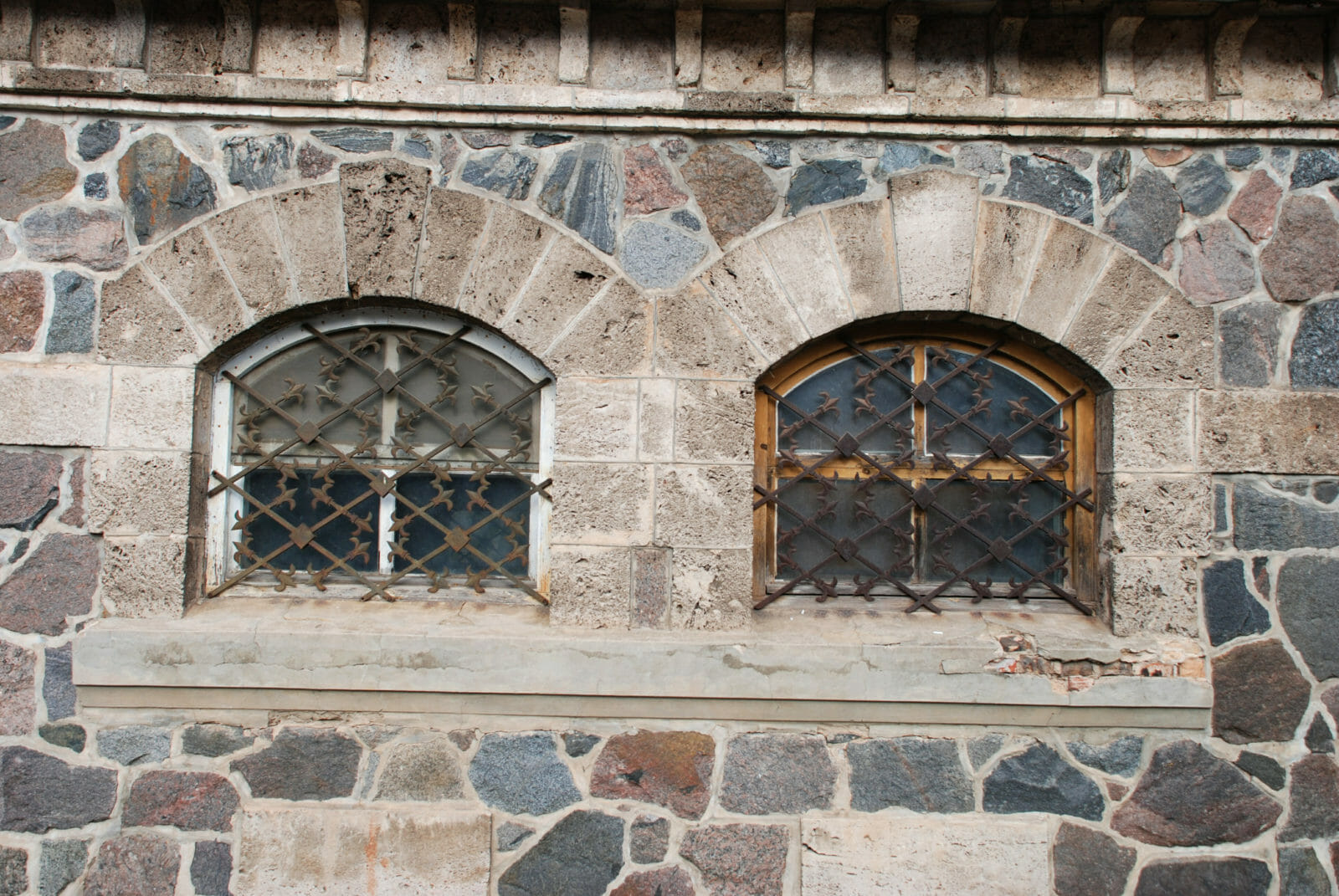
Your sill probably isn't this fancy!
Your sill probably isn’t this fancy!


Assessing the damage

Before you begin, you need to assess the damage to determine the extent of the required repair.

  • Is it simply a case of chipped and flaky paintwork that needs tidying up?
  • Do you have deeper cracks that need filling?
  • Is a more extensive rebuild required?

Once you’ve diagnosed the problem you can get cracking, filling in those cracks!

Freshening up the paintwork

You’ll be pleased to hear that this is a relatively easy job. Use a stiff wire brush to remove all the loose paint and dirt, before rubbing down the existing paint with medium grade sandpaper. Be careful to rub down the edges where any larger flakes of paint came away, so that you have a nice smooth gradient for the new paint.

Brush the sill with a soft brush to remove dust and dirt before applying the first coat of masonry paint – after any of the following work has been done if required of course! Allow to dry completely before applying a second and third coat.

Repairing small cracks

Follow the same initial process as with the above method, but pay extra attention to making sure that any cracks are free from dirt and moss — a clean surface is essential for the filler to adhere correctly.

Using a spatula, apply a ready mixed masonry filler like Sandtex to the cracks, taking care to fill them fully and correctly. Allow to dry before sanding flat with medium sandpaper and painting as above.

Rebuilding the sill

Determining when a sill repair requires professional assistance can be tricky, but if there are large chunks missing or the sill appears to be cracked all the way through, it’s probably time to call the pros.

Probably a job for the pros!

It is possible to fill in quite sizeable holes with the masonry filler method, but if the edges are crumbling away you’ll need to build moulds to shape the sill correctly – a job that’s probably beyond most DIYers skill level.

As you can see, with anything but the most severely damaged example, repairing a concrete window sill yourself is entirely possible. However, if you still think it’s a job too far for you and you’re in the Leeds or Harrogate area, feel free to give us a call or drop us an email and we’ll happily pop around to give you a quote.


Sprucing your home up this spring – exterior decorating projects

Posted on 29th March 20175th July 2018 by Louise Nelhams
Sprucing your home up this spring – exterior decorating projects

Spring has finally sprung, and it’s the perfect time to make a start on those DIY jobs that make a massive difference to how your home looks and feels – especially those exterior decorating projects!

fence painting for a spring exterior decorating project

This month we’re going to give you our top tips on sprucing up the exterior of your home so that you’re ready to welcome friends and family around for a BBQ or garden party.

Revitalise your house with these 6 exterior decorating projects…

  1. Paint your garden fence: a new colour will lift the whole exterior of your property, so rub that fence down with a wire brush and apply a couple of coats of wood treatment. Make sure that you use a soft brush to remove any loose dirt before applying the first coat, and then choose something like Cuprinol Shades. Easy to apply and offering many colour options, it’s ideal for the DIYer and provides 5 years of protection.
  2. Paint your gate: Is your metal gate looking sorry for itself? A rub down with some wire wool and sandpaper to remove any rust and dirt will prepare it perfectly for some metal paint. Lay a sheet down to protect the floor, give it a good clean with sugar soap, and then apply primer. Once dry you can use a small brush to apply two coats of metal paint.
  3. Paint your doorstep: A coat or three of decent masonry paint can transform a worn doorstep and give your house a completely new look. As with all masonry painting, prep first with a good sand and clean before applying the paint.
  4. Paint your window sills and surrounds: Old Victorian terrace houses often have concrete window sills that look fantastic when painted. Rub them down with wire wool, fill in any holes with ready mixed stone repair and rendering, and then apply primer and paint. Use the same colour and technique for the arches and surrounds.
  5. Jet wash your paths: A year’s worth of muck and grime will make any exterior paths or driveways look terrible, but a day with a hired jet wash and some elbow grease and your paths will soon look sparkling clean!
  6. Paint your house: A fresh coat of paint to your house’s exterior will make it look like a new property. It’s best to stick to fairly simple and neutral colours in our climate rather than attempting to bring a little continental sparkle with a brighter colour – we simply don’t have the quality of light to pull that off successfully so white works best.

None of these jobs should be too much for the brave DIY enthusiast, but we’re always here to offer some friendly advice. Some exterior decorating projects can feel a little overwhelming for the novice though, so if you live in Leeds, Harrogate or surrounding areas, please feel free to contact us for a quote!

Preparing and painting exterior walls the right way!

Posted on 29th March 20165th July 2018 by Louise Nelhams
Preparing and painting exterior walls the right way!

Nothing spruces up and adds perceived value to your property quicker than a new coat of paint, but do it wrong and your house will look woeful instead of wonderful. Many say that this is work best left to the professionals, and it’s certainly true that a seasoned pro will do a more efficient job of preparing and painting exterior walls. But with a little planning and preparation, it’s possible to make a decent go of it yourself – and this week in our blog, we’ll show you how…

Tools for the job

We say it often, but the best way to ensure a professional finish is to use the correct tools for the job. When it comes to prepping exterior walls you will need a medium or stiff wire brush to remove any loose paint and dirt from the walls, a scraper to remove areas of loose brick and cement, and a good quality ladder to ensure that you’re safe. We talked about ladder safety in a previous blog – please read it for reference before you start!

Preparation

Many of the principles we employ for painting interior walls also apply to the outside of your property – like spending at least as much time prepping as painting. Make sure that you remove all loose paint, dirt and masonry with the correct tools, followed by a wash down with detergent if the walls are dirty. Oh, and be sure to deal with any areas of fungus growth etc with a fungicidal wash.

Follow this process up by filling in any damaged areas with exterior filler and rubbing down, along with the existing paint, so that the new paint will adhere correctly. Pay particular attention to areas where the paint has flaked unevenly, rubbing down the edges to smooth them out – a medium grade sandpaper is ideal for this job.


scaffolding on house for painting
An exterior painting job of this size may require a pro!

Sealing and priming the walls

If the existing paint is in decent condition and you’re repainting the same colour it may be possible to skip the priming process, but it’s still best practice to do it and will give the best finished results. For bare walls, a masonry primer is essential to seal and create a surface that will take the final coats well. Use a medium to long piled roller for this job to quickly cover large areas and seal efficiently.

Painting the walls

If you’ve prepared your walls well, painting them becomes a pleasure rather than a chore. Mask up windows, sills and pipes in the same way as you would internally, and begin painting from the top of your house down so that you can better control dribbles. The brush or roller you use is dependent on the finish of your walls: smooth walls require a shorter pile than a heavily textured wall, and very heavily textured walls may necessitate a stippling action with a large brush (it may be better to leave that to the pros!).

If you follow our advice your house will soon be looking fantastic, but, of course, if you don’t fancy all this hard work yourself you can give us a call – we’ll be happy to do it for you! 


How to avoid potential DIY disasters!

Posted on 27th February 20165th July 2018 by Louise Nelhams
How to avoid potential DIY disasters!

We’ve been called in to rectify many DIY disasters in our time as professional painters and decorators, so this week we thought it would be a good idea to share with you some of our do’s and don’ts that will keep you safe in your home while you decorate. Some of these might seem obvious, but it always pays to cover all the bases when your safety is at stake.

Ladder safety

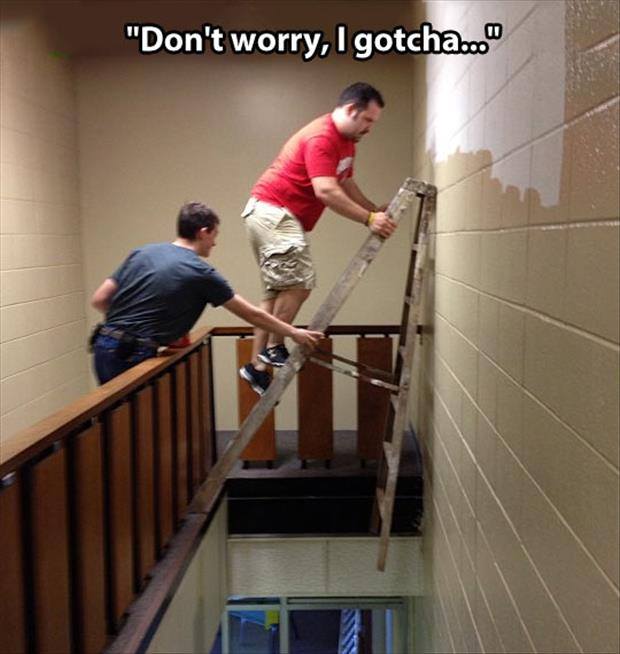
One of the primary causes of DIY accidents is poor ladder safety. A ladder is something that most of us own, but will rarely have been taught how to use properly. These simple tips will ensure that you never come a cropper:

  • Try to maintain three points of contact (two feet and one hand)
  • Always wear shoes with decent grip
  • Never over-reach
  • Reset the position of a ladder after 30mins to ensure it’s still secure
  • Try to maintain the optimum angle of 4:1 – the distance the bottom of the ladder is from the wall should be 1/4 of the height the ladder is against the wall
  • Always inspect your ladder for signs of damage or excessive wear before use
man falling off a ladder
Breaking the ‘3 points of contact’ rule

Drill safety

Hot on the heels of ladder accidents are disasters with a drill. These top tips should keep you safe:

  • Before drilling always check for wires and pipes with a pipe and live wire detector
  • Wear safety goggles!
  • Use the right drill for the job – a hammer drill is essential for heavy work
  • Consider cordless, because you can’t trip over a cord that isn’t there
  • Use the correct size bit for the screw to prevent shearing and potentially dangerous slipping
Man drilling with safety goggles
This guy’s doing it right!

Electrical safety

Whilst we’re all for people attempting their own DIY, we do strongly advise that you employ a qualified electrician for any electrical jobs. However, when it comes to decorating, as long as you’re safe around the electrics in your house you should be fine. Always remember to:

  • Use a plugin RCD with any electrical equipment such as drills, steamers or sanders so that in the unfortunate event of an accident, the power is instantly killed
  • Always cover plug sockets or use inserts when painting or stripping wallpaper with a steamer or wet rag

Breathe easily

Paints, varnishes and adhesives all have safety advice on the label for a reason, so please don’t ignore it.

Always apply these in a well-ventilated room and wear the appropriate mask for the job. This is especially important with high VOC products such as varnish and gloss paint, or if you’re in a small room. You might want to consider one of the excellent VOC-free or organic products on the market now – especially if you have health problems.

Painter Wearing Mask
Always use a mask when spraying

So if you want to minimise the risk of suffering any DIY disasters during your decorating and refurbishment adventures, follow this great advice, but if you’re in any doubt give the professionals a call – that’s us!


  • Terms & Conditions
  • Privacy & Cookies
  • © Rushton & Co. Ltd. 2013
  • Painting Contractors
  • About
  • Contact
  • Sitemap
  • Tradespeople Link Up
This website uses cookies to improve your experience. We'll assume you're ok with this, but you can opt-out if you wish.Accept Read More
Privacy & Cookies Policy

Privacy Overview

This website uses cookies to improve your experience while you navigate through the website. Out of these cookies, the cookies that are categorized as necessary are stored on your browser as they are essential for the working of basic functionalities of the website. We also use third-party cookies that help us analyze and understand how you use this website. These cookies will be stored in your browser only with your consent. You also have the option to opt-out of these cookies. But opting out of some of these cookies may have an effect on your browsing experience.
Necessary
Always Enabled
Necessary cookies are absolutely essential for the website to function properly. This category only includes cookies that ensures basic functionalities and security features of the website. These cookies do not store any personal information.
Non-necessary
Any cookies that may not be particularly necessary for the website to function and is used specifically to collect user personal data via analytics, ads, other embedded contents are termed as non-necessary cookies. It is mandatory to procure user consent prior to running these cookies on your website.
SAVE & ACCEPT

WhatsApp us