Skip to content
  • Home
  • About
  • Services
    • Interiors
    • Exteriors
    • Restoration
    • Spray painting
    • Commercial
  • Blog
  • Gallery
  • Contact
-->
  • Home
  • About
  • Services
    • Interiors
    • Exteriors
    • Restoration
    • Spray painting
    • Commercial
  • Blog
  • Gallery
  • Contact

Category: decorating

Decorating tips – turning your stairs into a feature

Posted on 25th June 20175th July 2018 by Louise Nelhams
Decorating tips – turning your stairs into a feature

When it comes to designing and decorating your home, it’s natural to want to focus on making each room reflect your character. That doesn’t, however, mean that you should neglect the connecting areas of your house e.g. the hallways, corridors and stairs. In fact, with a little bit of creative thinking, you can turn your stairs into a stunning feature in their own right. Here are some decorating tips to inspire you…

Stripped back to the wood

The trend in interior design is very much towards wood – either stripped and varnished or painted. This gives you lots of scope to be innovative with your stairs, such as:

  • Mixing dark with light – A deep and rich varnish like dark oak for the stairs works great if you use clear varnish for the risers. This style breaks up the stairs and makes them stand out without looking too showy.
  • Using paint instead of varnish – There’s nothing worse than spending time and money stripping your floorboards back to the wood to find that they’re in poor condition or look ugly. Wood paint will allow you to play around with the dark/light idea while also covering up all the sins of the natural wood.
  • Mixing it up – Don’t be afraid to try mixing it up and painting the stairs lighter than the risers! This works well if the staircase doesn’t get much natural light as it tends to lift the area.
  • Painting or varnishing runners – Runners have come in and out of fashion over the years, but we still like to see the creative use of them on a set of stairs. Paint the outer edges the same colour as your skirting boards and either varnish the centre or paint them a visually interesting colour. Consider adding a narrow stripe on either side in the same colour as the centre section for added interest.

More runners

Don’t discount more traditional carpeted runners – they’re fantastic in high traffic areas and will protect your stairs if the wood is old and worn. You can be creative by using nailed down rugs or off-cuts of carpet instead of dedicated runners.

Best of both worlds

Another option that works well, especially if you have noisy stairs, is to paint or varnish the risers and carpet the stairs. The combinations are endless, but make sure that you deal with the risers first so that you don’t drip on your new carpet.

Going the extra mile

LED lights have opened up a whole new world of interior design possibilities, but we bet that you’ve never considered them for your stairs! Try attaching strips of LEDs underneath the overhang of each stair to light up the risers – this works particularly well if you paint or stencil the risers with interesting features, but can look really classy with a simple black and white stair theme too.

As you can see, it’s possible to make your stairway a real feature and talking point with some basic DIY skills, but if you’re not sure what would work in your house give us a call! We’re always happy to offer some advice and personalised decorating tips, or we can just pop round and give you a quote.

Categories

  • budget
  • colour trends
  • coving
  • decorating
  • decorating tips
  • decorator's varnish
  • DIY
  • DIY Projects
  • exterior decorating
  • How-to
  • Interior design
  • lining paper
  • paint brush
  • paint drying times
  • painting
  • painting exterior walls
  • painting fresh plaster
  • painting woodwork
  • repairing a concrete window sill
  • shabby chic
  • shabby chic decorating
  • stained glass
  • Stripping wallpaper
  • Uncategorized
  • varnish
  • wallpaper
  • wallpaper designs

Recent Posts

  • Decorating Trends for 2021
  • Bringing Life Into Your Home
  • Five Ways To Make Your Feature Wall Flourish
  • The Psychology Of Colour, And How To Use It!
  • Need Better Productivity? Redecorate Your Office!

Painting a ceiling like a pro

Posted on 25th May 20175th July 2018 by Louise Nelhams
Painting a ceiling like a pro

Summoning up the enthusiasm to do a little home decorating is usually pretty easy, but when it comes to painting a ceiling, most people either call in a professional decorator, or just completely ignore it! If this sounds familiar, don’t worry because our guide on painting a ceiling like a pro will demystify the process and, hopefully, leave your hair paint free too!

Tools for painting a ceiling

As with every DIY job, it’s essential to be prepared and have the right gear. Fortunately, you can paint a ceiling without investing in expensive specialist equipment – although there are a couple of things that’ll make this task easier. Let’s take a look at what you need:

  • A decent roller set
  • A paint bucket
  • Easi-fill filler and filling knife
  • A good quality 2” brush
  • An extension pole (or old broom handle)
  • Lots of dust sheets!
  • Maybe a sanding pole
  • Sugar soap and sponges
  • Step ladders

When it comes to buying paint for the ceiling, it pays to spend a little more and get specialised ceiling paint because it’s designed to be almost splatter-free – something your hair will thank you for! We also recommend using good quality stain block paint if there are any water leak patches on the ceiling.

Preparation

Before you start make sure everything is covered with good quality dust sheets because it’s much harder to contain the mess from a ceiling paint job than almost anywhere else. Use Easi-fill to deal with any holes – it’s so easy to use, dries quickly and sands effortlessly.

If the ceiling is flat painted, a quick rub over with 100 grit drywall sandpaper will help to cut through years of dirt and neglect – after all, who washes their ceiling? Follow that with a wash down with sugar soap and water and you’re ready to go.

Painting

As previously mentioned, you’ll need to go over any areas of water damage with a stain-blocking primer first. A couple of coats should do it, but some stubborn stains may need more.

The devil is always in the details, so take the time to cut in – time spent here will make or break your finish so give it your best attention. Using a quality brush and a paint bucket means that you can focus on the job in hand – you only need a little bit of paint at any one time, and a paint bucket helps prevent major spillage accidents.

Woman painting a ceiling
After cutting in you can get down to the fun part: using the roller! Investing in the best quality lambswool roller will help keep the splatters to a minimum and ensure a really good coverage in the least possible time – that’s the combination a pro looks for. Work the ceiling in small areas, around 5’ square, first rolling one way and then back across the area at 90° to the first coat. Try to keep one edge wet for the next section to avoid overlapping marks, and feather the paint out on the areas you’re not painting next.

Textured ceilings

With a previously painted textured ceiling, it’s quite tough to get the same level of finish, but if you work slightly slower you should be able to get a good coverage. Be careful not to overwork the paint because you risk pulling the old layers from the ceiling –  another job for your high-quality lambswool roller.

As with every DIY and decorating job, if you’re careful and prepare properly there’s very little that can go wrong, but we’re always here for friendly advice or a quote if you’d prefer to let the experts take over. Painting a ceiling isn’t the most fun decorating job, but neglect it and you’ll regret it!


Spring interior DIY projects

Posted on 27th April 20175th July 2018 by Louise Nelhams
Spring interior DIY projects

Last month we gave you our top tips for sprucing up the exterior of your property this spring, but now you’ve made your house sparkle from the outside the inside might be letting it down – don’t worry, though, because this month we’re going to share our top ten interior DIY projects that’ll soon have your house shipshape.

  1. Make your grout sparkle – Nothing ruins a tiled surface like dirty grout. Use a toothbrush or a steam cleaner with a small attachment to give the grout and tiles in your bathroom a really good clean. If the dirt is stubborn, run a hot shower with the doors and windows closed to soften it up before scraping with a grout rake. Finish the job by going over the grout with a grout pen to make it white and fresh again.
  1. Revitalise your skirting boards – Over time gloss paint starts to yellow, so consider rubbing down, priming and repainting your skirting boards. You’ll be surprised at the difference this makes!
  1. Windowsills and wood frames –The same goes for your windowsills and wooden frames: a rub down with sandpaper followed by primer and a lick of gloss or eggshell paint will make them come to life.
  2. First impressions count!  – Giving the kick boards by your front and back door a rub down and coat or two of paint will mean the work you did on your exterior to create a great first impression isn’t wasted.
  3. Touch up the walls – Give your walls a scan with a critical eye to see if they need a little TLC. You may not want to paint them all, but check for areas of high traffic to see if they need a fresh coat to bring them back up to scratch.
  4. Decorator’s varnish to the rescue! – Once you’ve painted those high traffic walls, add a coat of matt decorator’s varnish so they’re easy to wipe down – it’ll save you time and money in the long run.
  5. Decals can make a difference – You might like to change things up a little with your interior design without redecorating completely. Decals can add a little interest and freshen things up quickly and effectively.
  6. Paint your radiators – Scuffed and scratched radiators can be a bit of an eyesore, so use radiator paint to bring them back to their former glory. You could also consider investing in some radiator covers for a faster alternative solution.
  7. Patch up peeling wallpaper – Look for edges that have peeled away: if it’s patterned wallpaper use paste to stick them back down; if it’s lining paper you can cut the loose parts out with a sharp blade, mix up some Gyproc Easy-fill and fill in the gaps. This can then be rubbed down and over-painted for a perfect finish.
  8. Deal with mould! – Use mould cleaner to remove mould patches from walls in the bathroom and repaint the affected area. Use mould-resistant paint if it’s a recurring problem. If your silicone around the bath is black the only real solution is to cut it away and start again. Tape up along the line of the wall and bath to create a smooth line, run the silicone along the gap and smooth down with a wet finger before removing the tape.

Get to grips with some or all of these jobs and your home will look much brighter ready for the summer. Of course if you’d prefer to get some professional help with your interior DIY projects and you live in the Leeds area, we’ll be happy to pop along and provide a free quote!

Sprucing your home up this spring – exterior decorating projects

Posted on 29th March 20175th July 2018 by Louise Nelhams
Sprucing your home up this spring – exterior decorating projects

Spring has finally sprung, and it’s the perfect time to make a start on those DIY jobs that make a massive difference to how your home looks and feels – especially those exterior decorating projects!

fence painting for a spring exterior decorating project

This month we’re going to give you our top tips on sprucing up the exterior of your home so that you’re ready to welcome friends and family around for a BBQ or garden party.

Revitalise your house with these 6 exterior decorating projects…

  1. Paint your garden fence: a new colour will lift the whole exterior of your property, so rub that fence down with a wire brush and apply a couple of coats of wood treatment. Make sure that you use a soft brush to remove any loose dirt before applying the first coat, and then choose something like Cuprinol Shades. Easy to apply and offering many colour options, it’s ideal for the DIYer and provides 5 years of protection.
  2. Paint your gate: Is your metal gate looking sorry for itself? A rub down with some wire wool and sandpaper to remove any rust and dirt will prepare it perfectly for some metal paint. Lay a sheet down to protect the floor, give it a good clean with sugar soap, and then apply primer. Once dry you can use a small brush to apply two coats of metal paint.
  3. Paint your doorstep: A coat or three of decent masonry paint can transform a worn doorstep and give your house a completely new look. As with all masonry painting, prep first with a good sand and clean before applying the paint.
  4. Paint your window sills and surrounds: Old Victorian terrace houses often have concrete window sills that look fantastic when painted. Rub them down with wire wool, fill in any holes with ready mixed stone repair and rendering, and then apply primer and paint. Use the same colour and technique for the arches and surrounds.
  5. Jet wash your paths: A year’s worth of muck and grime will make any exterior paths or driveways look terrible, but a day with a hired jet wash and some elbow grease and your paths will soon look sparkling clean!
  6. Paint your house: A fresh coat of paint to your house’s exterior will make it look like a new property. It’s best to stick to fairly simple and neutral colours in our climate rather than attempting to bring a little continental sparkle with a brighter colour – we simply don’t have the quality of light to pull that off successfully so white works best.

None of these jobs should be too much for the brave DIY enthusiast, but we’re always here to offer some friendly advice. Some exterior decorating projects can feel a little overwhelming for the novice though, so if you live in Leeds, Harrogate or surrounding areas, please feel free to contact us for a quote!

Everything you need to know about decorator’s varnish

Posted on 23rd February 20175th July 2018 by Louise Nelhams
Everything you need to know about decorator’s varnish

There are many tricks that professional decorators use to ensure that we deliver a level of finish and durability in our work that sets us apart from the average DIYer – and one such trick is the application of decorator’s varnish.

For that pro finish, preparation is absolutely key – which is why we mention it so often in our blogs! But equally important is the peace of mind you get from knowing your decorating exploits are going to stand the test of time. Decorator’s varnish helps to provide a longer-term result where it’s most needed.

What is decorator’s varnish?  

Essentially, it’s a varnish that you can apply to nearly all surfaces to provide a strong, waterproof layer of protection without impacting on the existing colour and texture. It’s a water-based varnish that’s available in three finishes – gloss, satin and dead flat – making it an ideal solution for a number of decorating jobs.

Where should I consider using it?

There are so many potential uses for this product, but these are the most common:

  • Apply to wallpaper in your children’s bedroom to create a washable and durable protective layer – no more headaches about crayon marks and dirty hand prints!
  • Apply to high traffic areas such as the wallpaper up the side of the stairs – this is an area of the house that we’re often asked to come back and reapply paint to, but decorator’s varnish makes this largely unnecessary
  • Perhaps you want to use an expensive statement wallpaper in your bathroom, but it’s not waterproof – a couple of coats of varnish will seal it in and protect you from expensive mistakes
  • Painted your kitchen cupboards and found that the paint scrapes off too easily? Apply a couple of coats to create a rock hard and washable protective layer
  • Protect wooden furniture without altering the finish or colour
  • Apply to chalk painted walls to seal in and prevent marks on such a soft surface
  • Can be used to seal plaster

As you can see, decorator’s varnish is almost a cure-all for the DIYer!

How do you use it?  

Because it’s water-based rather than oil-based, decorator’s varnish is very easy to apply without streaks or runs – just use a good quality brush or roller and apply the varnish in smooth strokes. Choose the dead flat version for wallpaper and painted walls, but always try a small test application somewhere inconspicuous first to ensure that the varnish doesn’t alter the colour – it should dry undetected, but there can occasionally be a slight colour change. Better safe than sorry!

Decorator holding a painting roller

In kitchens, where durability is more important, apply a coat of satin followed by dead flat – the result will be a rock hard scuff-resistant layer.

The varnish is usually touch dry in 15-20 minutes and ready for a second coat after an hour – that’s the beauty of water-based products!

We hope that this has given you the confidence to try decorator’s varnish for yourself, but if you’re not keen on tackling your decorating alone and if you live in the Leeds area, please feel free to call us to arrange a free estimate.

Filling and sanding walls ready for painting or wallpaper

Posted on 31st January 20175th July 2018 by Louise Nelhams
Filling and sanding walls ready for painting or wallpaper

We’ve previously written a brief guide on preparing walls, but here we go into a little more detail on how to smooth the surface by applying filler and sanding walls to help you get that genuine pro-standard finish…

The main thing that separates the average amateur DIYer from the professional decorator is the attention to detail during the essential preparation stage. When it comes to painting or wallpapering a wall, every extra hour spent ensuring that the surface is as perfect as you can make it will increase your overall sense of satisfaction upon completion.

Washing the walls

The first step is to wash away some of the grime and paste left from previous wallpaper by sponging down with a sugar soap solution. This is a good idea even if the walls haven’t been papered before, because any wall in a living space will attract dust and grease over time, so don’t be tempted to skip this step!

Filling in the blemishes

If money is no object it’s always worth having the walls skimmed by a master plasterer before painting or decorating your walls, but this is an expensive solution and unnecessary if your current plaster is in reasonable condition. Fortunately, there are products on the market that make filling smaller to medium holes relatively easy for the layman.

wall with lots of filler
Some walls need a lot of filling!

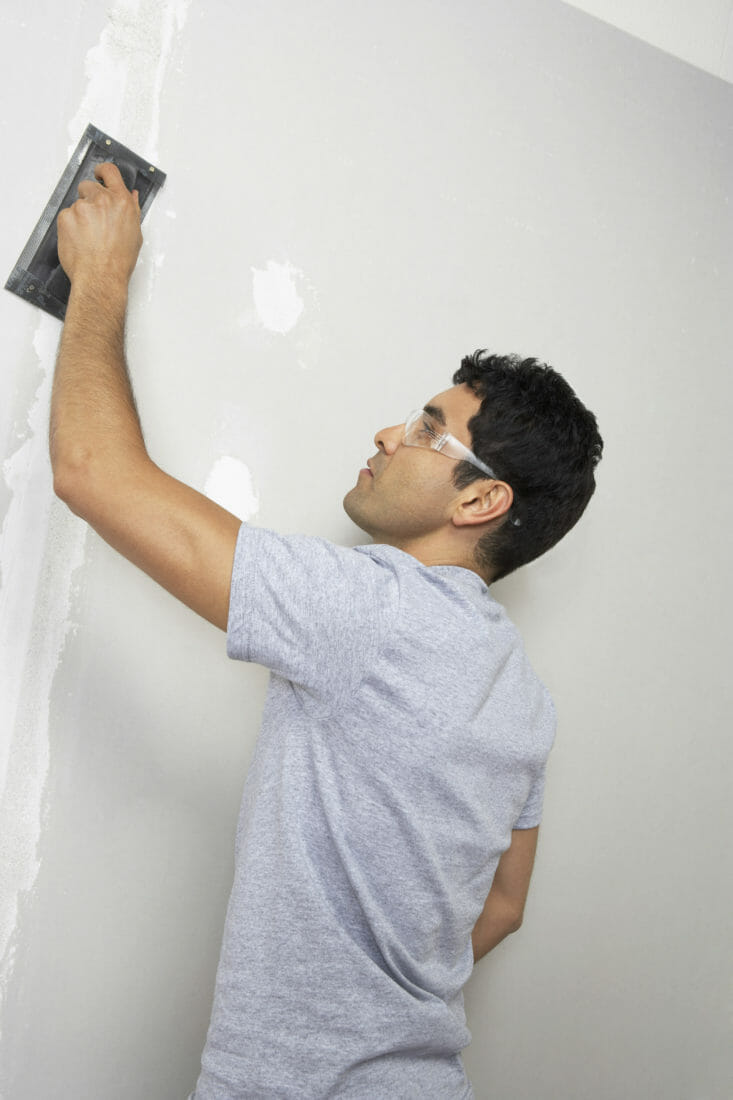
Gyproc Easi-Filler is easy to mix and use, dries quickly and sands down with the lightest of touches, making it ideal for the kind of blemishes you’re likely to find on your walls. It doesn’t shrink and sticks to most dust-free surfaces, but it has a tendency to dry out quite quickly so work fast! Oh, and wear a dust mask during the mixing stage because it’s a very fine powder.

Apply it with a plastering trowel for larger areas or a smaller decorator’s knives/wallpaper scraper for smaller holes. It’s dry to the touch within the hour on smaller areas, but large holes will need to be left overnight.

There are plenty of fillers on the market though, so do have a look in your DIY store to see what’s on offer!

Sanding walls down

This is a satisfying job that will transform a tired old wall if you follow our advice and this is an essential step if you’ve had to fill holes in the plaster:

  • It’s important to wear a quality dust mask for this job – please don’t forget this!
  • The grade of sandpaper you require will depend on the state of your walls, but a general starting point of 70-grade will quickly remove the worst of the debris from your walls
  • Use a sanding block to ensure a flat sand, and work in a circular motion as you move across the surface
  • After your first fill and sand, check the walls again and fill any spots you missed
  • Repeat the sanding process but with 120-grade paper
  • Go over the entire wall, as a quick sand will help create a key for paint of paste
  • Once you’re happy that the walls are smooth you can wash them down again

If your wall’s very big, it might be worth using a quality brushless random orbital sander to make this job easier. Make sure that it has the option to plug into a vacuum cleaner unless you want to make a lot of mess!

Follow this simple guide to filling and sanding walls and yours will soon be in perfect condition for your wallpaper or paint – but if you’re unsure or uncomfortable with the process and live in the Leeds or Harrogate area, you can always drop us a line and ask for a quote to do it for you.

Decorating colour trends for 2017

Posted on 23rd December 20165th July 2018 by Louise Nelhams
Decorating colour trends for 2017

If your New Year’s resolutions are more geared towards improving your living space than going to the gym then this is essential reading for you! This month we’re going to explore the forecasted decorating colour trends for 2017, so you can be sure that any design ideas you may be toying with are bang up to date.

Fortunately, colour trends don’t shift as quickly as high street fashion, so if you’ve decorated in 2016 there’s a good chance that your choice was a good one – but these are the colours grabbing the headlines amongst trendy interior designers.

Blue is the colour…

It may be the start of an old football chant, but in 2017 blue most definitely is the colour! Trend experts at Dulux have chosen Denim Drift as their colour of the year because ‘Blue is the colour of life; it is the clothes we wear, the sky we gaze at and the water that revitalises us,’ say Dulux. ‘Blue has been, and will continue to be, a constant in every aspect of our lives. From the deepest ink blue to the palest misty blue, this colour spans every spectrum of life; it is a royal colour, but it is also used for workers’ blue jeans.’

Dulux has created an entire complimentary palette around this key colour, allowing you the opportunity to use subtle warm shades of blue – something we often consider impossible – to create rich and welcoming, yet completely modern colour schemes in your home.

Terracotta

Terracotta colour in bathroom
Spice up your life with terracotta

We’ve always loved the warmth and welcoming depth of terracotta, but this year the trend is to move away from the rustic look into matte finishes for a clean and modern feel. Use sparingly on a feature wall to break up white or magnolia and add a touch of contemporary earthiness to a living space.

Blue-green

We’re seeing more and more interior designers talking about green again – not the rich forest greens that have always been popular in a living space or bedroom, but blue spectrum greens.

Traditionally used in bathrooms and kitchens, these colours can be a little cold if used in the wrong space, but we think it’s worth throwing caution to the wind and going for it! Accent them with bright orange furniture and splashes of colour to make your kitchen and bathroom the talk of the town!

Grey

Light grey has always been a perfect colour to build a room around because it’s so neutral and allows you to create contemporary styling with your furniture and soft furnishings. This year, however, designers are getting excited about the bolder use of matte mineral grey – a daring choice for a bedroom when accented with deep, rich reds and browns.

Living room in deep grey
Get bold with deep grey

Pantone’s Greenery

As eagerly anticipated as Dulux’s colour of the year is the choice of Pantone, and this year they’ve gone for as natural and grounding a green as we can ever remember.

Greenery will make you yearn for the first days of spring – a neutral yet natural green that works fantastically as a main colour or accent for some of the other bold choices we’ve mentioned.

We’re excited by the beautiful colour trends for 2017 that designers are moving towards, and hope to get the opportunity to work with you in turning your home into a stylish contemporary space that you can feel relaxed and comfortable in. If you want to chat with one of our decorating experts about any of these ideas you can contact us through our website or on Facebook or Twitter.

A guide to watching paint dry! Paint drying times for decorating

Posted on 29th November 20165th July 2018 by Louise Nelhams
A guide to watching paint dry! Paint drying times for decorating


There are many decorating jobs you can take on yourself, including painting and wallpapering, but it’s always essential to follow the correct procedure to produce a professional finish. We’re always talking about preparation and using the right tools for the job, but one factor you may not have considered is how long various paints and pastes take to dry before you can safely apply another coat. Here’s our guide to paint drying times to help you plan your decorating schedule…

Drying conditions

Obviously the ambient room temperature and humidity will be a major factor in drying time – a warm summer day with the windows open will allow paint or paste to dry much quicker than a cold and wet evening in January. The ideal drying temperature for most paints is about 21°C, so if it’s colder and more humid you need to recognise that the liquids in the paint or paste will evaporate more slowly.

Temperature showing as 21 degrees

Emulsion paint drying times

Water based emulsions dry the quickest and you can expect them to be touch dry in roughly 1-2 hours, but don’t add a second coat for another four hours for the best finish because your roller or brush could still pick up the first coat and create streaks.

Eggshell paint drying times

These paints are popular in kitchen and bathroom areas because they offer greater durability than a matt or satin emulsion – but that means they require longer drying times. In a typical scenario, these paints will be touch dry in 4-6 hours and ready for you to apply a second coat in 16-24 hours. It’s probably even more important to sit on your hands and remain patient with these paints before your second coat because they’re much more prone to pulling.

Gloss paint drying times

Stronger solvent based paints are excellent for your skirting boards, doors, window frames and radiators because they’re exceptionally hard-wearing. Allow a good 4-6 hours for these to be touch dry and 16-24 hours before you think about applying the second coat.  All solvent based paints should be applied with plenty of ventilation unless you want a headache from the fumes, so remember to open those windows!

Wallpaper paste drying times

Paste drying times are also quite varied and have a lot to do with the thickness and weight of the wallpaper you’re using, as well as the quality of the surface. Because there are so many factors, it’s best to err on the side of caution and watch for signs of a dry paper. If the paper feels bone dry to the touch it probably is, but also watch for any small bubbles being pulled flat to the wall as this is a great indicator that the paper is ready for paint. If you’re in any doubt, however, leave it overnight.

We hope this guide hasn’t been as boring as watching paint dry, but if you’re still not confident of achieving a perfect finish give us a call for advice or a no obligation quote – we’re happy to help!


Colours and moods – using colour to change the feel of your room

Posted on 31st October 20165th July 2018 by Louise Nelhams
Colours and moods – using colour to change the feel of your room


When it comes to decorating your home there are always decisions to make, but did you know that your choice of colour can have a big influence on how you feel when using a space? This month on our blog we’re going to show you how to understand the psychology of and link between colour and moods, so that you can make better interior design decisions.

How does colour affect a room?

All colours are not equal. Bright and bold colours are considered active because they excite and stimulate the mind and senses, and may be useful in encouraging creativity. Cooler, more muted colours are considered passive because they relax the mind and may improve our ability to focus. Neutral colours such as white and magnolia have less effect on mood, but do help create a sense of space.

Choose your colours wisely

Making a decision based on your favourite colour may seem like a wise move, but you could find yourself choosing something inappropriate for creating the ambiance you’re looking for. Let’s have a quick look at the basic properties and potential uses of each colour:

  • Red – This powerful and stimulating colour is a good choice for a dining room or lounge where people gather together because it encourages conversation and raises the energy of the people in the room. Like all darker and richer colours, it’s also great for making a large room feel more inviting and snug. It’s a good idea to avoid using red in the bedroom if you plan on getting a good night’s sleep!
  • Yellow – Used sparingly, yellow adds a touch of brightness and freshness to any room, making it ideal for bathrooms and kitchens. Think carefully before using it as a main colour though because studies have suggested that it may provoke feelings of anger and frustration – not the ideal mood when there are sharp objects around!
  • Green – No other colour promotes feelings of restfulness and tranquillity like green.
    It soothes the eyes and calms the mind, making it a perfect colour for a bedroom, or any space you want to use for relaxation.
  • Blue – Another calming colour often used in bedrooms and nurseries, but be careful to choose your shade carefully. Light blues can make a room feel cold, so balance them with warmer coloured soft furnishings. Darker blues have to be used sparingly because they can make a room feel sad, so it’s better to use them on smaller feature walls.

Other colours such as orange and purple add a zesty and quirky feel to any room. Used with caution they will give a primarily neutral room a bit of spark and character, so don’t be afraid to try them out.

Red wall in living room
Red can make a room feel cosy

Neutral colours never go out of fashion

The beauty of basing your colour schemes on the neutral colours – grey, black, white and brown – is that they all work as a base for further experimentation and allow you to change the feel of your rooms with soft furnishings, curtains and feature walls. Be careful with your use of black, though, or you might find the walls pressing in on you!

We hope you’ve enjoyed this article on the psychology of colours and moods, and how to apply it to your next interior design or decorating project, but if you feel that you need some professional help, we’re always here to offer our advice.


Quick guide on how to wash paintbrushes

Posted on 28th September 20165th July 2018 by Louise Nelhams
Quick guide on how to wash paintbrushes


If you’re a regular reader of our blog, you’ll notice that we’re always talking about the importance of preparation when starting a decorating project. Apart from the obvious skill difference, this is one of the steps that separates the amateur from the professional – the other one is how you take care of your equipment.

This month we’re going to give you our top tips on taking care of these crucial tools so that they’ll give you years of great service. Here’s a quick guide on how to wash paintbrushes after (and during!) use…

Should I keep them or ditch them?

There’s a temptation to buy cheap brushes and throw them in the bin after use, and while this is an option it’s not great for the environment or your decorating projects! In a previous blog where we offered our advice on choosing a paint brush, we talked about the false economy of buying cheap brushes – they’re often poorly made, drop bristles like an old Christmas tree, and leave streak marks in your finish. It’s definitely worth buying quality gear and taking care of it!

Washing brushes

Well done! You’ve finished your decorating and feel like putting your feet up, but ten minutes with your brushes at this point is time well spent:

  • Begin by scraping as much excess paint back into the tin as you can – waste not, want not!
  • For water-based paints, fill a bucket with warm soapy water and work as much of the paint out of the bristles with your fingers as possible.
  • Repeat this process with fresh soapy water until the brush is clean.
  • Flick the brush dry outdoors – do it inside another big bucket if you’re worried about spraying paint residue around the garden.
  • Repeat the cleaning and drying process in fresh water but without the soap.
  • Wrap the brush up in thick paper and store.

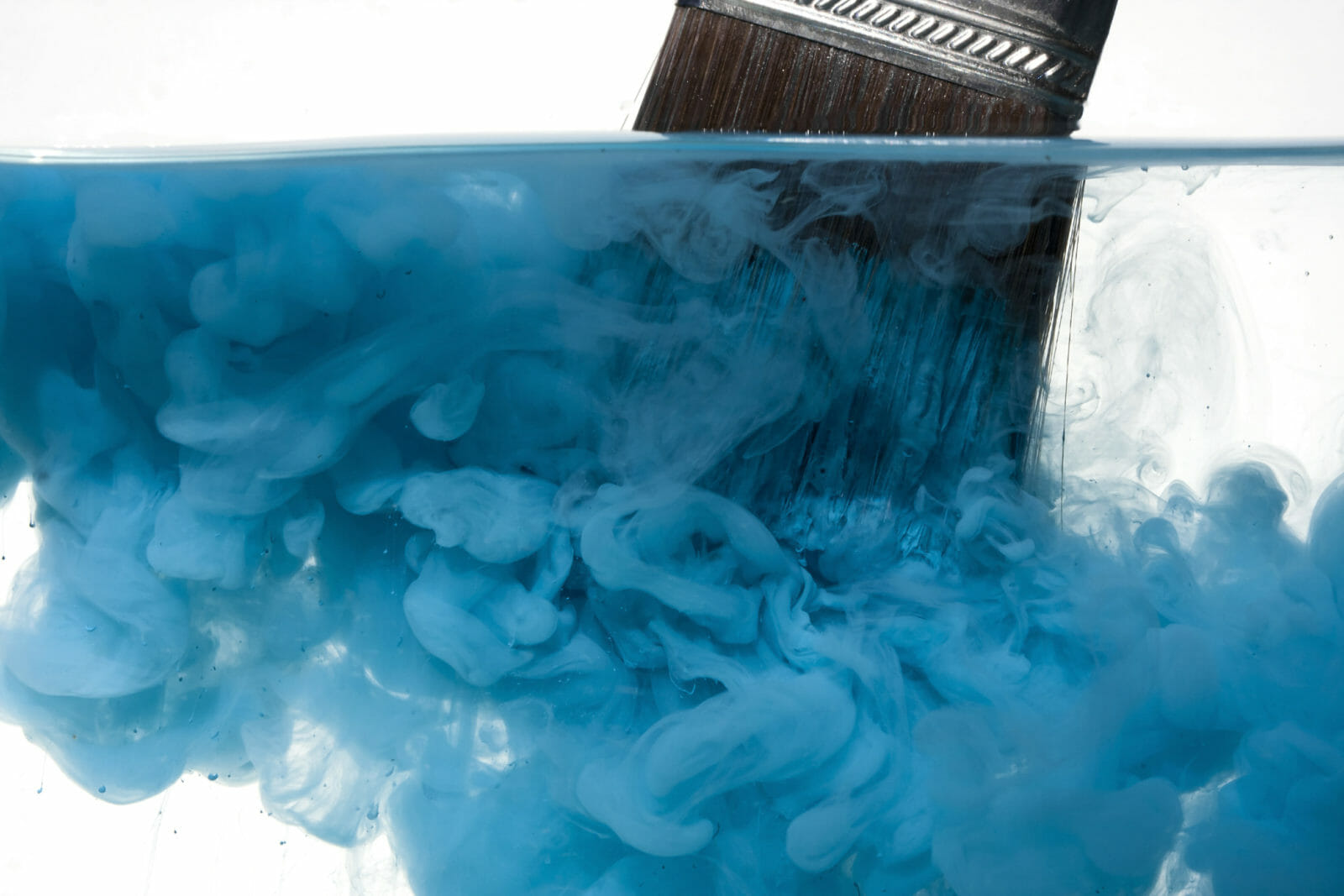
Washing paintbrush in water

Oil-based paints will require thinners, but don’t be tempted to soak your brushes because you’ll risk damaging the bristles. Follow the same basic process as with water-based paint:

  • Scrape off excess paint.
  • Pour the manufacturer’s recommended thinners into a small tub.
  • Dip your brush up and down and swirl around to work the thinners into the bristles – don’t use your hands!
  • Shake off into a big bucket or safe open space.
  • Repeat the cleaning and drying process again with fresh thinners.
  • Wrap the brush in paper and store.

If you follow this simple process your brushes should serve you well for years, but you can increase their life further by always using the same brushes for water and oil based paints – mixing them up will make them harder to clean and damage the bristles.

Storing during the job

If you’re in the middle of a big decorating project, it’s not necessary to clean your brushes every night – but you will need to store them in a manner that doesn’t ruin them. Scrape off any excess paint, wrap them in clingfilm and use masking tape around the handles to keep them airtight overnight. They’ll be perfectly usable the next day.

Congratulations! You’ve taken another step towards decorating like a pro and can now relax with that cup of tea knowing that next time you need those brushes they’ll be in tip-top condition!


Posts navigation

Older posts
Newer posts
  • Terms & Conditions
  • Privacy & Cookies
  • © Rushton & Co. Ltd. 2013
  • Painting Contractors
  • About
  • Contact
  • Sitemap
  • Tradespeople Link Up
This website uses cookies to improve your experience. We'll assume you're ok with this, but you can opt-out if you wish.Accept Read More
Privacy & Cookies Policy

Privacy Overview

This website uses cookies to improve your experience while you navigate through the website. Out of these cookies, the cookies that are categorized as necessary are stored on your browser as they are essential for the working of basic functionalities of the website. We also use third-party cookies that help us analyze and understand how you use this website. These cookies will be stored in your browser only with your consent. You also have the option to opt-out of these cookies. But opting out of some of these cookies may have an effect on your browsing experience.
Necessary
Always Enabled
Necessary cookies are absolutely essential for the website to function properly. This category only includes cookies that ensures basic functionalities and security features of the website. These cookies do not store any personal information.
Non-necessary
Any cookies that may not be particularly necessary for the website to function and is used specifically to collect user personal data via analytics, ads, other embedded contents are termed as non-necessary cookies. It is mandatory to procure user consent prior to running these cookies on your website.
SAVE & ACCEPT

WhatsApp us