Skip to content
  • Home
  • About
  • Services
    • Interiors
    • Exteriors
    • Restoration
    • Spray painting
    • Commercial
  • Blog
  • Gallery
  • Contact
-->
  • Home
  • About
  • Services
    • Interiors
    • Exteriors
    • Restoration
    • Spray painting
    • Commercial
  • Blog
  • Gallery
  • Contact

Category: decorating tips

Preparing Wood for Painting

Posted on 27th October 20145th July 2018 by Louise Nelhams

In a recent blog we shared some useful tips on preparing your walls ready for wallpapering – and this month it’s the woodwork’s turn!

In a perfect world, we could just slap some paint on wood and all would be good! However, unless you want a messy finish and paintwork that is prone to chipping and flaking, you can’t take shortcuts. As is often the case, especially with decorating, the preparation stages are the most laborious but also the most important.

So if you have some skirting boards, windowsills or doors to decorate and you want some tips on preparing wood for painting, here’s our guide to getting it ready for a professional end result…

  1. Remove old paint – No matter how tempting it may be, it’s best not to apply a fresh coat over existing, older paint if there are lots of layers, if the paintwork is badly damaged or if you’re covering dark paint with light. Use a putty knife or small scraper to remove the paint, or a good quality paint stripper or electric hot air gun. If the paint is in good condition, you can skip this stage and go straight to the next.
  2. Sanding – If your woodwork is in good condition, you can sand off the glossy surface of the existing paint in order to provide a ‘key’ for the new coat. Use coarse sandpaper for this, either manually or for larger surface areas, you can buy or hire an electric sander to make the job quicker – a detail sander is useful for smaller areas. If you’ve already removed most of the older paint, this stage will ensure that you get rid of any remaining residue. Bear in mind that sanding creates a lot of dust, so cover soft furnishings (if you can’t remove them) and wear a dust mask and goggles.After you’ve used the coarser paper, finish off with fine sandpaper with a 150 grit rating or more to get smoother surface. Always sand in the same direction as the grain.
  3. Filling – If there are any knots, dents, deep scratches or holes in the wood, fill them with wood putty or fast drying wood filler. Once it’s dry, sand it down so that the filled areas are flush with the rest of the wood.
  4. Clean – You don’t want to prime or paint over dust or dirt, so before you continue you will need to wipe everything down with a damp cloth. Now make yourself a cup of tea while you wait for it to dry!
  5. Mask – Using the decorator’s friendly helper, a roll of masking tape, mask off any areas you don’t want to paint and areas around doorframes or the top of skirting boards to make sure you get a clean line and no paint splashes or splodges where they shouldn’t be!

    Masking off areas before painting wood
    Mask above the wood line before you paint
  6. Prime time – Before you get glossing, you need to prime the wood to give a smooth and clean finish. It’s best to apply a couple of coats if possible, and choose a grey coloured primer if you’re applying dark gloss, or a white one for lighter and more vivid colours.
  7. Paint away! Now your wood is ready for painting. Apply two or three coats and make sure you leave plenty of time between each – painting on half dried, tacky gloss will spoil the end result.

Of course, if this sounds like too much hassle or hard work, you can always call in the professionals! If you live in the Leeds area, our decorators will be happy to come along and give you a no-obligation quote for preparing your wood for painting and getting that gloss finish just perfect.

Categories

  • budget
  • colour trends
  • coving
  • decorating
  • decorating tips
  • decorator's varnish
  • DIY
  • DIY Projects
  • exterior decorating
  • How-to
  • Interior design
  • lining paper
  • paint brush
  • paint drying times
  • painting
  • painting exterior walls
  • painting fresh plaster
  • painting woodwork
  • repairing a concrete window sill
  • shabby chic
  • shabby chic decorating
  • stained glass
  • Stripping wallpaper
  • Uncategorized
  • varnish
  • wallpaper
  • wallpaper designs

Recent Posts

  • Decorating Trends for 2021
  • Bringing Life Into Your Home
  • Five Ways To Make Your Feature Wall Flourish
  • The Psychology Of Colour, And How To Use It!
  • Need Better Productivity? Redecorate Your Office!

7 Shabby Chic Decorating Tips

Posted on 25th September 20145th July 2018 by Louise Nelhams
7 Shabby Chic Decorating Tips

Giving your home an overhaul and love the shabby chic look? Our top tips will help you to set the scene for your shabby chic decorating makeover…

Shabby chic has been a popular style for interior design for quite some time now – but while the furniture and accessories are easy to identify, what should you do with the walls?

The overall shabby chic image is one which echoes antique and vintage style with signs of wear and tear – but that doesn’t mean that you want peeling wallpaper! So before you start filling your room with repurposed furniture and beached-out or second hand fabrics, you need to take care of those walls. Here are our tips for shabby chic decorating…

  1. Colours – plain colours can work well as a backdrop for your shabby chic furnishings, but getting the right colour is essential. Soft pastel colours are ideal for this design style – think pink, soft rose, mint, a gentle aqua green or a light, sky blue. If you’re planning lots of colour accents, then you can stick with white or ecru emulsion instead.
  2. Wallpaper – If you’ve decided to add a feature wall, then look out for wallpaper with birds, birdcages, teapots, big flowers or other vintage or nature-inspired prints. You can even look for retro wallpaper for a 70s vibe.
  3. Wood – Distressed wood is a dominant feature when it comes to shabby chic, so if you’re choosing plain walls you could consider cladding the lower portion for a vintage feel. You can whitewash or paint the wood to match the rest of the walls, or use a slightly different shade to add a little interest. The great thing with this approach is that it doesn’t need to be perfect – rough areas of wood don’t need to be sanded, and any knocks or knots simply add to the overall effect.
  4. Exposed bricks – if you’re decorating your kitchen or living room, exposed brickwork can be the perfect feature, and you can paint over it to match the overall colour scheme if you wish. It’s a great way to add some texture and could save plastering and wallpapering!
  5. Murals and stencils – if you can’t find the right wallpaper, you can always stick with plain emulsion and then use stencil, mural or decal. Look for flowers and trees or anything natural and organic with some splashes of bright colours – and if you’re using a stencil, don’t feel you need to map out the pattern perfectly; if you’re confident, just freestyle your way through!
  6. Pattern rollers or printing – this is another great way of adding some texture to your plain walls; you can buy patterned rollers for a quick yet creative finish, or you can use a stiff sponge or even a potato to create your own print pattern.
  7. Tiles – Adding some tiles is another great idea if you’re decorating a room in a shabby chic, although this is probably best kept for bathrooms and kitchens. Reclaimed tiles from decades gone by are perfect as they are likely to be showing some signs of age. Don’t feel they have to match either, as long as the colours complement your overall scheme, some variety will definitely add some spice! You can even go one step further and use the smaller tiles to create a mosaic, or use some old broken pots and crockery for the same purpose.


How to prepare your walls for wallpaper

Posted on 31st July 20145th July 2018 by Louise Nelhams
How to prepare your walls for wallpaper

So you’ve chosen you’ve chosen your lovely new wallpaper and you want to get hanging, but before you get out the paste and pasting table, you need to make sure you’ve got a good, blank canvas. Follow this simple guide to prepare your walls for wallpaper and you’ll be sure of an expert finish!

Decorating isn’t everyone’s favourite job, especially the prep worked involved – but as they say, if a job’s worth doing, it’s worth doing properly and when it comes to wallpapering, never has a truer word been spoken!

Taking time to prepare your walls for wallpaper can be arduous, but it’s essential if you want to achieve a professional finish. It will make hanging your paper much easier, ensure that it stays put and that it won’t be spoiled by unsightly lumps and bumps. Granted, it’s not an exciting job, but it’s pretty easy when you know how… So here’s a quick guide to preparing your walls for wallpapering, the professional’s way.

Step 1 – Strip!
Not a personal statement you understand, but we are, of course, referring to any existing wallpaper. No shortcuts – you need to remove EVERY trace of old paper. Use a steam stripper along with the traditional scraper if you can and get every layer off.

If the current wallpaper has been applied directly to plasterboard, be extra careful not to damage the surface by gouging through the paper or applying too much steam.

Preparing your walls for wallpaper
Not much fun but an essential part of the wallpapering prep!

Step 2 – Smooth
Gently scrape off any remaining bits of wallpaper or paint with a scraper and then buff and smooth the surface with a sanding block.

Step 3 – Clean
If there’s any mould present, you can wash down these areas with a bleach solution. Otherwise, use sugar soap to wash down the walls, removing any paste residue, dirt and stubborn bits of liner or paper.

Step 4 – Plaster
Often when you remove old paper, some of the plaster underneath will be chipped or flaked. Don’t just ‘paper over the cracks’! Pick out any areas that are coming loose or have become powdery and then repair using filler. Also pay attention to the tops of skirting boards and around door frames too – if you’re left with any gaps after your initial prep work, you can use flexible sealant on these areas to make them good. Once the filler has ‘gone off’, or set, you can use your sanding block again to smooth the repaired areas

Step 5 – Sizing
Apply a primer/sealant or watered-down paste solution with a brush or roller over the entire area to be decorated. This provides a better base for hanging your wallpaper and will make sure it stays firmly fixed in place – it will also make pattern-matching easier, as you’ll be able to slide the paper into position without risk of tearing.

Step 6 (optional) – lining paper
Hopefully your walls will now be fully prepped for hanging your gorgeous wallpaper, but if you have lots of newly repaired and plaster-filled areas or visible hairline cracks, it’s worth considering a layer of lining paper before you put up the good stuff! Once your lining paper is up, leave to dry overnight and then tomorrow, you can get cracking with the real thing!

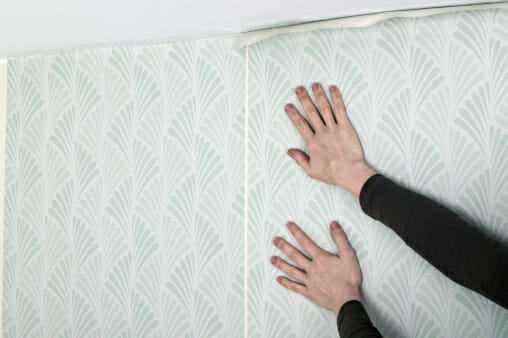
New wallpaper hung on ready prepared walls
The hard work will be worth it to get a finish like this!

Posts navigation

Newer posts
  • Terms & Conditions
  • Privacy & Cookies
  • © Rushton & Co. Ltd. 2013
  • Painting Contractors
  • About
  • Contact
  • Sitemap
  • Tradespeople Link Up
This website uses cookies to improve your experience. We'll assume you're ok with this, but you can opt-out if you wish.Accept Read More
Privacy & Cookies Policy

Privacy Overview

This website uses cookies to improve your experience while you navigate through the website. Out of these cookies, the cookies that are categorized as necessary are stored on your browser as they are essential for the working of basic functionalities of the website. We also use third-party cookies that help us analyze and understand how you use this website. These cookies will be stored in your browser only with your consent. You also have the option to opt-out of these cookies. But opting out of some of these cookies may have an effect on your browsing experience.
Necessary
Always Enabled
Necessary cookies are absolutely essential for the website to function properly. This category only includes cookies that ensures basic functionalities and security features of the website. These cookies do not store any personal information.
Non-necessary
Any cookies that may not be particularly necessary for the website to function and is used specifically to collect user personal data via analytics, ads, other embedded contents are termed as non-necessary cookies. It is mandatory to procure user consent prior to running these cookies on your website.
SAVE & ACCEPT

WhatsApp us